Dr. Pradnya Gurav
Dr. Pradnya Gurav
Research Area:
Stem Cell Biology
Research Topic:
Role of (n-3 PUFAs) in reducing side effects of chemotherapy
Publications:
Kumar J, Gurav R, Kale V, Limaye L (2014) Exogenous Addition of Arachidonic Acid to the Culture Media Enhances the Functionality of Dendritic Cells for their Possible Use in Cancer Immunotherapy. PLoS ONE 9(11): e111759. doi:10.1371/journal.pone.0111759
Presentations (Oral/poster):
Poster presented on Preparation of biocompatible and bactericidal films using silver doped galactomannan/gelatin/PVA nanocomposite for biomedical applications in 3 rd International Conference on Recent Trends in Bioengineering (ICRTB 2020) organized by MIT School of Bioengineering Sciences & Research, Pune on 31 st January 2020.
Dr. RuchaWadapurkar
Dr. RuchaWadapurkar
Research Area:
Next generation sequencing, Cancer genomics
Research Topic:
Computational analysis of next generation sequencing data and its applications in clinical oncology of ovarian cancer
Academic qualification
- M.Sc. Bioinformatics (2016) from Department of Bioinformatics, Walchand Collge, Solapur.
- B.E. Computer Science (2013) from N.K. Orchid College of Engineering and Technology, Solapur.
Awards
- ACER- Cancer innovative award for best innovative and novel idea” for oral presentation on Computational analysis of targeted sequencing data of ovarian cancer cell lines in International conference on basic and translational cancer research: novel ideas and approaches.
Publications
- Computational analysis of next generation sequencing data and its applications in clinical oncology (Informatics in medicine unlocked, Elsevier, volume 11).
- Big data analytics for handling NGS data and its applications in identifying cancer mutations (Advances in Bioengineering, Springer book chapter).
- Identification of ovarian cancer mutations by computational analysis of targeted sequencing data and their impact on protein structure and function (Under review).
Presentations (Oral)
- Identification of ovarian cancer mutations using next generation sequencing (ICRTB-2018).
- Computational analysis of whole exome sequence data to identify ovarian cancer mutations (ICRTB-2019).
- Computational analysis of targeted sequencing data of ovarian cancer cell lines (ICBTCR-2020).
<
Dr. Nilofer Karim Shaikh
Research Area:
Bioinformatics
Research Topic:
Working in the field of Drug Designing, Molecular Docking, Data mining. -Onco omics, Genomics, Metabolomics, Proteomics, Transcriptomics, Biomarker for cancer, Precision medicine for Cancer (PCM) -Cancer informatics, Big data analysis, Machine learning, AI based compute cure for cancer, cluster. -R, Python
Patent
- Bioinformatics, Cancer omics, Big data analysis
Awards
- Participated and Won 1st Prize (Oral Presentation) in 2nd International Conference on Recent trends in Bioengineering (ICRTB 2019).
- Participated and won best e-poster in "virtual International Conference on
Basic and Translational Cancer Research: Novel Ideas and Approaches; ICBTCR2020.
Publications
- Under review A Review on Computational Analysis of Big Data in Breast Cancer for Predicting Potential Biomarkers
Presentations (Oral/poster): - Identification of Oncogene Biomarker by Profiling TCGA Omics Data Breast and Ovarian Cancer for Personalized Medicine organized by Cancer Education and Research (ACAR), school of life sciences, B.S. Abdur Rahmen Cresent institute of science and technology, Chennai India.
- Identification of oncogenic biomarker panels by profiling TCGA omics data for Breast cancer personalized medicine 3rd International Conference On Recent Trends In Bioengineering ( ICRTB 2020 )
- Identification of Oncogenic Biomarkers for Ovarian Cancer by Integrated Text Mining and Cancer Omics data organized by 2nd International Conference on Recent trends in Bioengineering (ICRTB 2019) organized by MIT School of Bioengineering Sciences and Research (MITBIO)
Publication
- Computational analysis of BACE1 involved in Alzheimer’s disease using zebra fish (Daniorerio) as a model.
- Docked complex of Cibacron Blue show a potential inhibitor againsed 3D structure of BACE-1
Project
- Homology Modeling and Procheck Analysis of Pfemp1 involved in Malaria
- Designing And Development Of Novel Inhibitor For FALCIPAIN2 Involved In Malaria
- Docked complex of Quinine show a potential inhibitor againsed 3D structure of FALCIPAIN2
Dr. Yogita Ranade
Dr. Yogita Ranade
Research Area:
Research Topic:
Research Publications
- Sharma AK, Sawant SD, Adsule PG and Rajguru YR (2009). Comparison of Commercial and Locally Identified Yeast Strains in Relation to Young Wine Quality of Cabernet Sauvignon. S. Afr. J. Enol. Vitic., 30 (2), 148-150.
- Sharma AK, Rajguru YR, Adsule PG and Goswami AK (2013). Pre- treatments of Tas-A-Ganesh grape bunches and subsequent effect on their drying. Indian J. Hort. 70(1), March 2013: 107-111.
- Sawant IS, Rajguru YR, Salunkhe VP and Wadkar PN (2012). Evaluation and selection of efficient isolates of Trichoderma species from diverse locations in India for biological control of anthracnose disease of grapes. Journal of Biological Control, 26 (2), 144-154,
- Sawant IS, Sawant SD, Rajguru YR and Wadkar PN (2012). Bio efficacy of Trichoderma in reducing deadwood formation and enhancing bud sprouting in grapevines. Journal of Biological Control, 26 (3): 260-265, 2012.
- Salunkhe VP, Sawant IS, Banerjee K, Rajguru YR, Wadkar PN, Oulkar DP, Naik DG, Sawant SD (2013). Biodegradation of profenofos by Bacillus subtilis 672 isolated from grapevines (Vitis vinifera). J Agric. Food Chem., 61, 7195-7202.
- Sawant IS, Wadkar PN, Rajguru YR, Mhaske NH, Salunkhe VP, Sawant SD and Upadhyay A (2016). Biocontrol potential of two novel grapevine associated Bacillus strains for management of anthracnose disease caused by Colletotrichum gloeosporioides. Biocontrol Science and Technology, 26 (7) 964–979.
- Sawant IS, Wadkar PN, Ghule SB, Rajguru YR, Salunkhe VP, Sawant SD (2017). Enhanced biological control of powdery mildew in vineyards by integrating a strain of Trichoderma afroharzianum with sulphur. Biol. Control, 114, 133–143.
- Yadav DS, Ranade YH, Samarth RR and Fand BB (2019). Cytology of stem borer Stromatium barbatum (F.) infesting grapevines in Maharashtra. Indian j. entomol. 81 (1), 170-176.
- Yadav DS, Ranade YH, Mhaske S and Ghule S (2019). Compatibility of insecticides with Metarhizium brunneum (Petch) and Beauveria bassiana (Bals.) for bio-intensive management of pink mealybug, Maconellicoccus hirsutus (Green). 33 (3), 253-263.
- Sawant IS, Salunkhe VP, Ghule SB, Wadkar PN, Chavan V, Ranade YH, Sawant SD (2020). Induction of resistance in grapevines against powdery mildew by Bacillus strains. 73(3), 35-44.
- Yadav DS, Mhaske SH, Ranade YH, Ghule SB, Shashank PR, Yakovlev R (2020). First record of occurrence of Dervishiya cadambae on grapevine, Vitis vinifera, along with its morphological and molecular identification and pathogenicity evaluation potential of Metarhizium brunneum as its biocontrol agent.
- Saha S, Sawant IS, Pawar SB, Yadav DS and Ranade YH (2020). Compatibility of Polyoxin D zinc salt 5% SC against various biocontrol agents used in grapes.
- Ranade Y, Sawant I, Saha S, Chandrashekhar M and Pathak P (2021). Epiphytic Microbial Diversity of Vitis vinifera Fructosphere: Present Status and Potential Applications. Curr. Microbiol. 78 (4), 1086-1098.
- Fand BB, Yadav DS, Mhaske SH and Ranade YH (2021). Biological parameters of stem borer Stromatium barbatum reared on grapevine wood logs under laboratory conditions. Int. J. Trop. Insect Sci. 41 (4), 2795-2803.
- Ranade YR, Pathak P, Sawant IS, Chandrashekar M, Chavan V and Saha S (2022). Trichoderma asperelloides 5R and Bacillus licheniformis TL-171 reduce epiphytic colonization and post-harvest berry decay due to Cladosporium sp. and improve the shelf life of grapes. Trop. Plant Pathol. 1-9.
- Ranade Y, Pathak P, Chandrashekar M, Saha S (2022). Fungitoxicity profile of Cladosporium cladosporioides C1, as a leveraging tool for postharvest management of grapes. Biologia. 77.
- Yadav DS, Ranade YH, Sawant I, Shashikant Ghule S, Sagar Mhaske S (2022). Isolation, identification and functional characterisation of bacteria associated with gut of wood feeding Stromatium barbatum (Fabr.) (Coleoptera: Cerambycidae) larvae. Int. J. Trop. Insect Sci. 1-14.
Conferences
- Ranade Y, Pathak P, Sawant I, Chandrashekhar M, Chavan V and Saha S. Application of Trichoderma and Bacillus during initial berry developmental stages inhibits epiphytic colonization of grape berries by Cladosporium spp., a post-harvest pathogen. 2nd International conference for Recent Trends in Bioengineering held at MIT School of Bioengineering Sciences & Research, Pune, India, (2019).
- Ranade Y, Saha S, Chandrashekar M, Shinde S and Pathak P. Preliminary studies on possible application of Kocuria sp. in plant growth promotion and bioremediation. 3rd International conference for Recent Trends in Bioengineering held at MIT School of Bioengineering Sciences & Research, Pune, India, (2020).
- Ranade Y, Saha S, Chandrashekar M, Shinde S and Pathak P. Pattern of acephate tolerance in bacteria isolated from grape berry surface. 4th International conference for Recent Trends in Bioengineering held at MIT School of Bioengineering Sciences & Research, Pune, India, (2021).
- Ranade Y, Pathak P, Chandrashekar M and Saha S. Screening of bacteria isolated from grape berry surface for biosurfactants production possessing antimicrobial activity”. 5th International Conference on Advances in Agriculture, Environmental and Biosciences for Sustainable Development (AAEBSD) Uttar Pradesh. (2021)
- Ranade Y, Pathak P, Chandrashekar M and Saha S. Cladosporium sp: An Emerging Pre-harvest Pathogen in Vineyard of India Involving Considerable Economic Loss. 2nd Agrobiodiversity Congress, Italy (2021).
- Ranade Y, Pathak P, Chandrashekar M and Saha S. Production, characterization and antagonistic potential of biosurfactant produced by Bacillus sp. against Colletotrichum gloeosporioides causing anthracnose disease in grapes. 5th International conference for Recent Trends in Bioengineering held at MIT School of Bioengineering Sciences & Research, Pune, India (2022).
- Attended conference on “International Dialogue on Indian Viticulture: Way Forward” organized by ICAR-National Research Centre for Grapes, Pune during 15-16 November, 2019 at Pune.
Dr. Navya Sethu
Dr. Navya Sethu
Research Area:
Sensor development
Research Topic:
Design and development of portable systems for environmental monitoring and microbial disinfection
Patent
- Provisional Indian Patent on Device and assay for detection of antibiotics in industrial effluents, dated 16/09/2019 with Application No. 201920137177
Publications
- N. Sethu, R. Vyas. (2020). Overview of Machine Learning Methods in ADHD Prediction. In R. Vyas (Ed.), Advances in Bioengineering (1 ed.): Springer Singapore. pp. 51-72
Presentations (Oral/poster)
- Presented paper on Development Of A Genetic Programming Based Model For Prediction Of Attention Deficit Hyperactivity Disorder in International Conference on Recent Trends in Bioengineering (ICRTB 2019) organized by MIT School of Bioengineering Sciences & Research, Pune on 16 February 2019.
- Presented paper on Classification Model for predicting disease stage: ADHD Case Study in International Conference on Recent Trends in Bioengineering (ICRTB 2018) organized by MIT School of Bioengineering Sciences & Research, Pune on 17 February 2018.
Dr. Nandini Sandeep Kotharkar
Research Area:
Research Topic:
Currently working on Design and Discovery of Nano based drug delivery systems for efficient delivery of Phytochemicals from Nyctanthes arbor tristis.
Background
- Phytopharmaceuticals approach for nanoparticles based drug delivery system.
Conference
- Pharmacological and Phytochemical Evaluation of Nyctanthes arbor-tristis.
Dr. Vedashree Sirdeshmukh
Research Area:
Design and Development of biosensor for the detection of bacterial pathogens
Research Topic:
Conference Paper & Poster Presentation
- Presented poster entitled “Chemically synthesized pure and Sr- doped CuBi2O4 for photoelectrochemical application at ICRTB 2019, MIT-ADT University Pune, Pune.
- Presented poster entitled “Comparison of Square Wave Voltametry (SWV) and Differential Pulse Voltametry (DPV) Using CuS, MgS, CdS for Enhanced Detection of Pathogens” at ICMAT, Singapore 2019.
Manoj K. Sabnani
Manoj K. Sabnani
Research Area:
Onco Immunology, Antibody Engineering, Drug Discovery.
Research Topic:
Antibody discovery/engineering using in silico tools.
Publications:
- Manoj K. Sabnani, Robin Rajan, Bradley Rowland, Vikram Mavinkurve, Laurence Wood, Alberto A. Gabizon, Ninh M. La-Beck.
Liposome promotion of tumor growth and angiogenesis is associated with modulation of antitumor immune response. Nanomedicine: Nanotechnology, Biology and Medicine, Volume 11, Issue 2, 259 – 262. DOI: http://dx.doi.org/10.1016/j.nano.2014.08.010. - Robin Rajan, Magdalena Karbowniczek, Haley Pugsley, Manoj K. Sabnani, Aristotelis Astrinidis, Ninh M. La-Beck.
Quantifying autophagosomes and autolysosomes in cells using imaging flow cytometry. Imagestream methods: Cytometry Part A, Volume 87, Issue 5, 451 – 458. DOI: 10.1002/cyto.a.22652 - Devin B. Lowe, Camille K. Bivens, Alexis S. Mobley, Christian E. Herrera, Amanda L. McCormick, Timea Wichner, Manoj K. Sabnani, Laurence M. Wood & Jon A. Weidanz. TCR-like antibody drug conjugates mediate killing of tumor cells with low peptide/HLA targets, mAbs, 9:4, 603-614, DOI: 10.1080/19420862.2017.1302630
- Anuraj N, Sabnani Manoj K, Mukesh Yadav, Jyotsana Kharate J, Deepika Sharma R and Rachna Chourasia J. (2012).
Identification and characterization of proteases and amylases producing Bacillus licheniformis strain EMBS026 by 16S rRNA Gene Sequencing. International journal of Microbiology Research ISSN: 0975-5276 & E-ISSN: 0975-9174, Volume 4, Issue 5, 2012, 227-231. - Robin Rajan, Manoj K. Sabnani, Laurence M. Wood, Vikram Mavinkurve, Alberto A. Gabizon and Ninh M. La-Beck. Pegylated liposomal alendronate: The impact of the drug cargo on carrier-induced immune modulation. American Association of Cancer Research. DOI: 10.1158/1538-7445.AM2016-4008 Published July 2016
- SSS Peri, Manoj K Sabnani, MU Raza, S Ghaffari, S Gimlin, DD Wawro. Detection of specific antibody-ligand interactions with a self-induced back-action actuated nanopore electrophoresis sensor Nanotechnology 31 (8), 085502
- J Kaur, MK Sabnani, BY Stephens, D Nandadeva, JA Weidanz, PJ Fadel Peripheral Blood Mononuclear Cell‐Derived Superoxide Production, Spontaneous Baroreflex Sensitivity, and Vascular Function in Chronic Kidney Disease Patients. The FASEB Journal 34 (S1), 1-1.
- Book Chapter: Reference Module in Biomedical Sciences. Stem cells as Drug delivery vehicle DOI:10.1016/B978-0-12-801238-3.65443-0
- Serkan Yaman, Harish Ramachandramoorthy, Gizem Oter, Daria Zhukova, Tam Nguyen, Manoj Kumar Sabnani, Jon A Weidanz* and Kytai Truong Nguyen* Melanoma Peptide MHC Specific TCR Expressing T-Cell Membrane Camouflaged PLGA Nanoparticles for Treatment of Melanoma Skin Cancer. Frontiers in Bioengineering & Biotechnology Section. (September 2020)
- Sai Santosh Sasank Peri, Manoj Kumar Sabnani, Muhammad Usman Raza, Elizabeth L. Urquhart, Soroush Ghaffari, Jung Soo Lee, Min Jun Kim, Jon Weidanz, George Alexandrakis. Quantification of Low Affinity Binding Interactions between Natural Killer Cell Inhibitory Receptors and Targeting Ligands with a SelfInduced Back-Action Actuated Nanopore Electrophoresis (SANE) Sensor.. IOP Nanotechnology.
- Zaki, Magdi E.A., Sami A. Al-Hussain, Vijay H. Masand, Manoj K. Sabnani, and Abdul Samad. 2021. “Mechanistic and Predictive QSAR Analysis of Diverse Molecules to Capture Salient and Hidden Pharmacophores for Anti-Thrombotic Activity” International Journal of Molecular Sciences 22, no. 15: 8352. https://doi.org/10.3390/ijms22158352
Mr. Surojit Sadhu
Mr. Surojit Sadhu
Research Area:
Chemoinformatics and Drug Discovery
Research Topic:
Using Chemoinformatics and Machine learning to discover novel anti-viral molecules.
Presentations (Oral/poster):
- As founder of Advent Informatics I have delivered numerous training session on chemoinformatics tools.
- Delivered lecture on chemoinformatics and drug discovery in the Drug Discovery Hackathon training organized the Ministry of Human Resource and Development in association with CSIR and AICET.
- Delivered a talk on “Evidence-based toxicity alerts assisting drug discovery in real-time” in OpenTox Asia-2019 organized at CSIR- Indian Institute of Chemical Technology
- Delivered a talk on “Recent Advances in Chemoinformatics and Drug Discovery” in Drug Discovery India 2019 organized by Select Biosciences.
- Presented poster titled “Using Information models for data analysis and Workflow” in SSX India – 2017
- Presented a poster on “ViMAL- Virus Molecular Association from Literature” in Drug Info meet 2009
Madhavi P. Bhongale
Madhavi P. Bhongale
Research Area:
Biomedical Imaging
Research Topic:
Design and development of multi-disease detection model using Diagnostic Imaging Technology
Publications:
- Bhongale, M., Kaushal, P. and Vyas, R. (2024) ‘Automated COVID-19 detection from chest X-ray and CT images using optimized hybrid classifier’,Int. J. Biomedical Engineering and Technology, Vol. 45, No. 4, pp.269–295.

- Graphical abstract of binary classifier for detecting COVID-19 using Improvised Shape Local Binary Texture Feature
Extraction(I-SLBT) - Bhongale, Madhavi, et al. "Patch-based U-NET model and MSqueezeNet-PyramidNet for efficient segmentation
and classification of tuberculosis, pneumonia, and COVID-19."Multimedia Tools and Applications(2025): 1-35. 
- Framework for Segmentation and Classification (S&C) of Lung Disease (LD) Model Using Chest X-ray (CXR) Images

- DiagnoScan-X Workflow for Lung Disease Detection: Image Upload, Preprocessing, Segmentation, Feature Extraction,
Classification, and Results Display - Madhavi P. Bhongale, Renu Vyas, Role of BioJava in the department of Bioinformatics Tools Advances in Bioengineering, Springer Nature (2020)
- Off-line Signature Verification Using Artificial Neural Network International Journal of Emerging Technology and Advanced Engineering, Volume 3, Issue 9, September 2013 ISSN: 2250-2459, ISO 9001:2008 © IJETAE International Journals: www.ijetae.com, Madhavi D. Malekar, Sachin Patel.
- Off-line Signature Verification Using Artificial Neural Network& Error Detection International Journal of Computer Science and Information Technologies, Volume5, Issue 4, 2014, ISSN : 0975-9646 © IJCSIT International Journals: www.ijcsit.com, Madhavi D. Malekar, Sachin Sohara.
- Off-line Signature Verification Using ANN in Futurizm 17 organized by PDEA’s College of Engineering, Pune.
Presentations(Oral/Poster):
- Presented paper on Detection of infectious diseases from chest X-ray and CT Images using a new Optimized Classifier in International Conference on Recent Trends in Bioengineering (ICRTB 2018) organized by MIT School of Bioengineering Sciences & Research, Pune on 12-13 February 2022.
Deepali Ghorpade
Deepali Ghorpade
Research Area:
Genomic Data Analysis
Research Topic:
Computational analysis of Next generation sequencing data using big data analytics approach.
Publications:
- “Obstacle Detection and Avoidance Algorithm for Autonomous Mobile Robot using 2D LiDAR”, IEEE International Conference on Computing, Communication, Control and Automation (ICCUBEA), ISBN: 978-1-5386-4008-1, 2017.
- “Human Skin Color Detection Algorithm Optimization with CUDA”, IEEE International Conference on Computing, Communication, Control and Automation (ICCUBEA), ISBN: 978-1-5386-4008-1, 2017.
- Big data analytics for handling NGS data and its applications in identifying cancer mutations (Advances in Bioengineering, Springer book chapter).
- “The Obstacle Detection and Avoidance Algorithm for Robotic System using 2DLiDAR and Embedded Linux”, International Journal of Control Theory and Applications, pp.693-699, 2017.
Presentations (Oral):
- Obstacle Detection and Avoidance Algorithm for Autonomous Mobile Robot using 2D LiDAR (ICCUBEA -2017).
- Human Skin Color Detection Algorithm Optimization with CUDA (ICCUBEA -2017).
Sagarika Saha
Sagarika Saha
Research Area:
Next Generation Sequencing and Molecular Oncology
Research Topic:
Novel biomarker and therapeutic agents’ discovery against cancer
Awards:
“1st Position award for the best innovative and novel research idea” in Poster Presentation on ‘Study of the neuroprotective potential associated with dietary supplementation of Coenzyme Q10 using Drosophila melanogaster model of Alzheimer’s disease’ in ARIC- Annual Research and Innovation Conclave, Institute of Advanced Research, Gandhinagar.
Presentations:
1. ‘Coenzyme Q10 possess neuroprotective potential in Drosophila melanogaster model of Alzheimer’s disease’ at ‘The Indian Drosophila Research Conference (InDRC)’, Indian Institute of Science Education and Research Kolkata (IISER K), Kolkata, West Bengal, India.
Mr. Amol Kahandal
Mr. Amol Kahandal
Research Area:
Biomaterials
Research Topic:
Synthesis of metal oxide nanoparticles using bio-templates and study of their biological applications
Publications:
Publications: A sensitive image-based optical detection of heavy metal ions using green synthesized silver nanoparticles has been published in the International Journal of Environmental Science and Technology (Springer)
Sunita Fernandes
Sunita Fernandes
Research Area:
Plant Biotechnology
Research Topic:
Nanotechnology based bio fertilizer and pesticide for agrochemical Industry.
Vandana Yadav
Vandana Yadav
Research Area:
Cancer Biology
Research Topic:
Role of unfolded protein response in gynaecological cancers
Awards:
CSIR NET JRF, ARS NET
Divya Wasnik
Divya Wasnik
Research Area:
Bioinformatics
Research Topic:
Transcriptomic data analysis of MAP Kinases and identification of novel compounds for inhibition of Cancer
Shivanjali Yadav
Shivanjali Yadav
Research Area:
MATERIAL SCIENCE
Research Topic:
Metal-organic Frameworks for biological application
Amol Dattatraya Mahajan
Research Area:
Vaccine Research and Development
Research Topic:
Optimising fermentation conditions using Design of Experiment (DoE) to produce a Vaccine
Presentations (Oral)
- Fermentation process development using a statistical method called Design of experiment (DoE) in Biopharmaceutical research
Aniket Ramakant Gawali
Research Area:
Animal Tissue Culture, Breast Cancer, Chemotherapy
Research Topic:
In vitro evaluation of synergistic effect of n-3 PUFAs with chemotherapy on breast cancer cells
Mr. Netaji Khot
Mr. Netaji Khot
Research Area:
Orthopaedics
Research Topic:
Artificial Intelligence Based Identification of Hip Implant Dislocation Post Total Hip Arthroplasty
Shivnarayan Bhosale
Shivnarayan Bhosale
Research Area:
Infectious Disease and Next Generation Sequencing
Research Topic:
Topic approval in process
Awards:
DBT-Biotechnology Industrial Training Programme (BITP) Apprenticeship (2022), JGEEBILS (2020,2021,2023), Mumbai University PET (2020).
Mohammed Tabrez Banegar
Research Area:
Infection Biology & Immunology
Research Topic:
Topic approval in process
Publications
- Singh, P., Banegar, M. T., Lobo, R. A., & Mukherjee, S. (2024). Common laboratory organic solvents are better medium for molecular detection of RNA viruses using PCR. Indian Journal of Medical Microbiology, 49, 100596.
Awards
- Maharashtra- SET, GATE (2019)
Seema Deshmukh
Seema Deshmukh
Research Area:
Genetic engineering and biomaterial synthesis
Research Topic:
Exploration of microbial systems through integrated omics and genetic engineering approaches for bioremediation and synthesis of sustainable biomaterial
Seema Kawade
Seema Kawade
Research Area:
Environmental Science
Research Topic:
Metagenomics Analysis of Environmental samples for exploring Biodiversity.
Akshay Babasaheb Janrao
Research Area:
Biomass-Derived Functional Biomaterials
Research Topic:
Biorefinary Approach for Sustainable Biomass Valorization.
Sudiksha Alandkar
Sudiksha Alandkar
Research Area:
Cancer Biology
Research Topic:
Drug Repurposing
Swapnali Sanjay Bhosale
Research Area:
Microfluidics
Research Topic:
Microfluidic Liver-on-a-Chip Models for 3D Cell Culture and Anticancer Efficacy of Doxil with EPA and DHA
Awards:
- Best M.Sc. Research Thesis Award – 2025 under the 9 th International Conference “Advances in Agricultural, Biological and Biodiversity Conservation for Sustainable Development (ABCD-2025 )”.
Ritesh Suryabhan Vairagade
Research Area:
Molecular Neuroscience , Translational Medicine , Nanomedicine & Drug Delivery.
Research Topic:
Nanoparticle-Assisted Herbal Phytochemical Therapy for Modulating TDP-43 Protein Aggregation and Disaggregation in Neurodegenerative Disorders.
Shruti Reddy
Shruti Reddy
Research Area:
Nano Technology based healthcare system.
Research Topic:
Polymeric Nanoparticle Platforms for Non-Invasive Disease Diagnosis.
Publications:
Original Article:
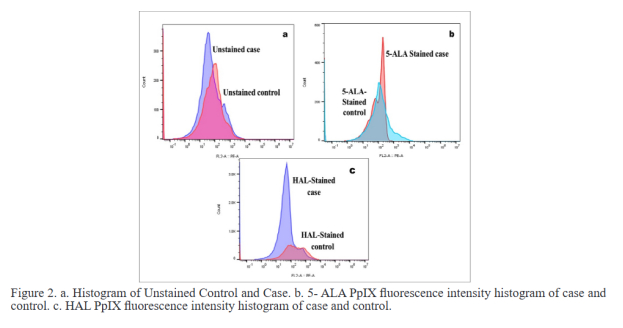
- Reddy S, Ghagane SC, Nerli RB. Comparative Evaluation of Urinary Biomarkers BLCA1, BLCA4, 5-ALA, and HAL in Liquid Biopsy for Early Bladder Carcinoma Detection. Asian Pac J Cancer Biology. DOI: https://doi.org/10.31557/APJCB.2026.11.3.721
Main Figure / Graphical Abstract Description:
- This study presents a non-invasive liquid biopsy approach for the early detection of bladder cancer using urinary biomarkers (BLCA-1 and BLCA-4) together with fluorescence-based techniques, including 5-ALA-induced fluorescent cytology, HAL-induced flow cytometry, and a novel 5-ALA-induced flow cytometry method introduced in this study for the diagnosis of bladder cancer using liquid biopsy. Urine samples collected from bladder cancer patients and healthy controls were analyzed to evaluate the diagnostic performance of each method. The combined assessment of BLCA-1 and BLCA-4 demonstrated superior diagnostic accuracy, while fluorescence-based assays enabled the visualization and quantification of malignant urothelial cells through protoporphyrin IX (PpIX) fluorescence. These findings support the integration of molecular biomarkers and fluorescence diagnostics as a rapid, sensitive, and non-invasive strategy for the early detection of bladder cancer.

Review Article:
- Shruti R, Ghagane Shridhar C, Nerli RB. (2025). Recent Developments of Biomarkers in Diagnosis of Genitourinary Cancer Using Liquid Biopsy. International Journal of Advanced Multidisciplinary Research and Studies. DOI: https://doi.org/10.62225/2583049X.2025.5.3.4508
Main Figure / Graphical Abstract Description:
- Review focuses on non-invasive liquid biopsy approaches for early detection of genitourinary cancers using urinary biomarkers, exosomes, methylated DNA markers, miRNAs, and biosensor-based diagnostic technologies. The study highlights advanced molecular diagnostic tools for improving sensitivity and specificity in bladder cancer detection.
- Copyright Registered: “5-ALA induced flowcytometry to detect bladder cancer using liquid biopsy” under IP Office, Govt. of India (2025).
AWARDS:
- NIL
Presentations:
- Presented an e-poster on “Common Cancer Myths and Misconceptions” in DBT New Delhi Sponsored National Seminar on Current Trends in Medical Biotechnology, Kochi, Kerala (2022).
- Participant – e-Poster Presentation organized by KAHER (2023).
Sonali Uday Gaikwad
Sonali Uday Gaikwad
Research Area:
Plant Biotechnology
Research Topic:
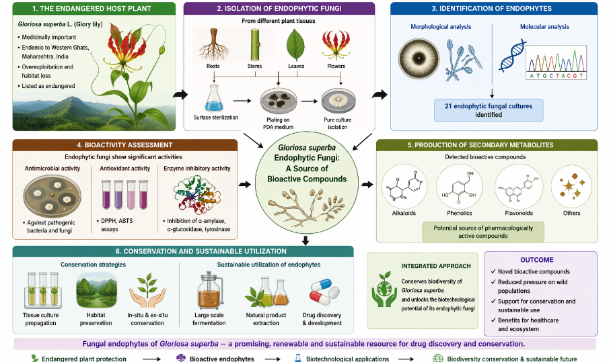
Exploration of endophytic microbes of Glory Lily (Gloriosa superba L.) from the Western Ghats for industrial applications
Publications:
- S.Gaikwad, B.Shinde, Y.Mahajan, R.Vyas, and N.Kadoo, “Biotechnological Potential of Endophytic Fungi Isolated from the Endangered Medicinal Plant Gloriosa superba.” Biotechnology and Applied Biochemistry73, no. 2 (2026): 723–737. https://doi.org/10.1002/bab.70064
Abstract:
- The glory lily (Gloriosa superba L.) is a medicinally important and endangered plant found in the Western Ghats of Maharashtra, India. It harbours a diverse community of endophytic fungi with immense biotechnological potential. To explore the potential medicinal properties of the endophytes, this study sought to isolate, identify, and assess the bioactivity of endophytic fungi from various plant tissues of G. superba, such as roots, stems, leaves, and flowers. Twenty-one endophytic fungal cultures were isolated and identified with molecular and morphological analyses. Bioactivity assays demonstrated their antimicrobial, antioxidant, and enzyme-inhibitory properties, supported by the production of secondary metabolites, such as alkaloids, phenolics, and others. These findings highlight the potential of G. superba–associated fungal endophytes as a sustainable source of pharmacologically active compounds, reducing the reliance on harvesting the endangered host plant from its wild habitats. While exploring its endophytes for various applications, conservation strategies, including tissue culture propagation and habitat preservation, should be employed to protect wild G. superba populations. This integrated approach would support biodiversity conservation and sustainable utilization of fungal endophytes isolated from this endangered plant species.